I want to tell you about seven yokai.
Not because I'm obsessed with Japanese folklore (I am, but that's a different post). Because when I sat down to design the avatars for continuu.it, I realized something I hadn't seen written anywhere else.
Every builder I know fails the same way twice.
Not in big, dramatic ways. In quiet, repetitive ways. The same kind of project. The same point in the timeline. The same excuse. The same Friday night staring at the screen wondering why this one died too.
The pattern is the person. And the person can't see it.
So I built a mirror.
The Loop Society is seven avatars, each one a different reason builders abandon what they start. You pick the one that describes you. Not because you're a "Hoshi type" forever. Because the moment you can name your pattern, you can start working with it instead of against it.
Here's the origin of each one, and why it exists.
Why yokai? Why not just cartoon mascots?
Quick context before the characters.
Yokai are creatures from Japanese folklore. Spirits, demons, ghosts, animals with too many tails. They're not evil. They're not good. They exist to teach mortals something about themselves.
That's exactly what I needed.
A cute mascot tells you the app is friendly. A yokai tells you the app sees you. There's a difference between a tool that says "you got this!" and a tool that says "ah. You're the one who restarts the same project four times. I know that one."
The Loop Society is the second kind.
Each yokai represents a specific failure mode I've watched happen, over and over, in indie builders and freelancers and ex-corporate founders. Each one earned its place because I either lived it myself or watched someone I respect live it.
Let's go.
1. Momo, the Procrastinator's Friend
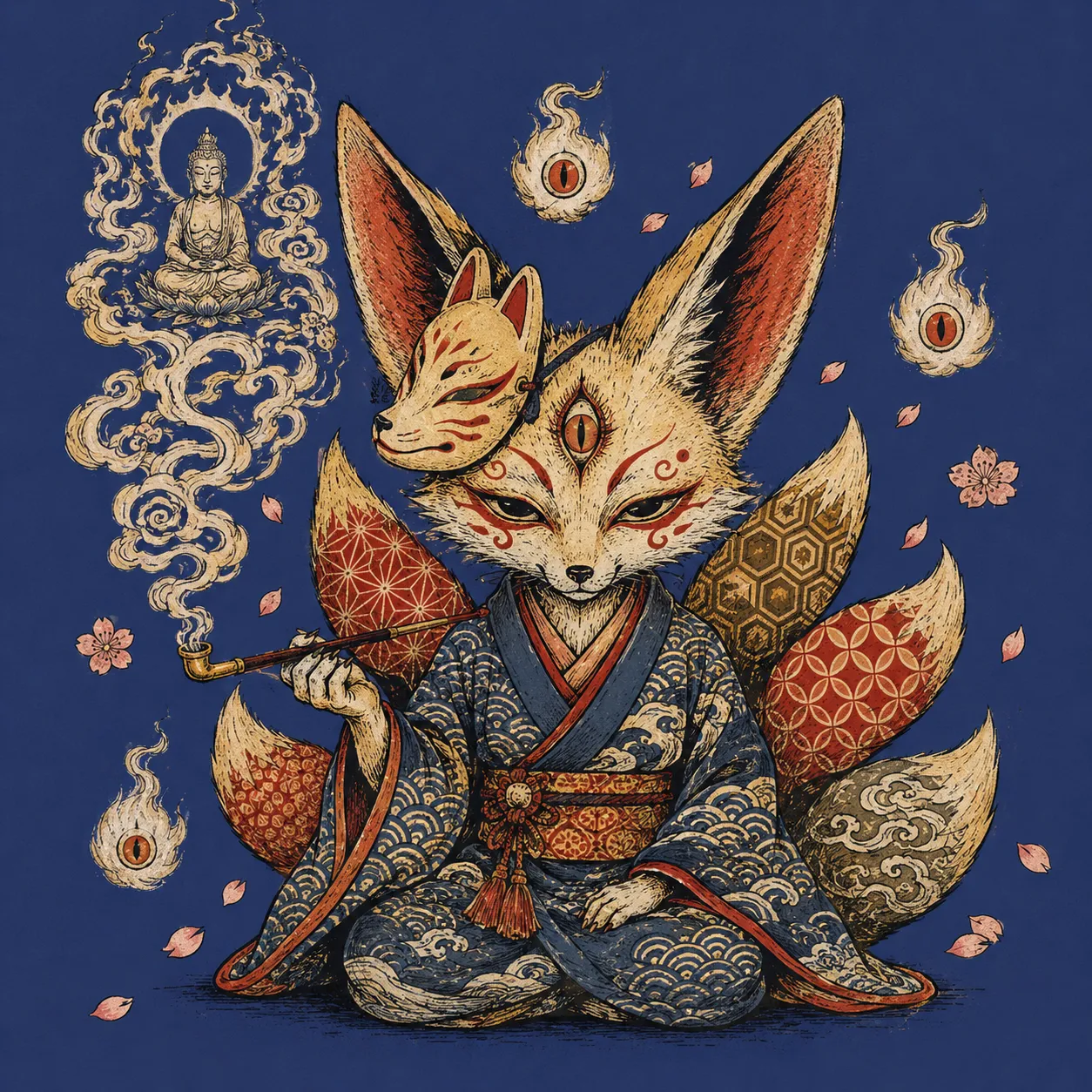
Momo is a kitsune. A small fennec fox with too many tails and a clay smoking pipe.
Momo always says "tomorrow."
I built Momo first because Momo is the most common builder I meet. The one who postpones everything. Not out of laziness. Out of a quiet, accurate sense that the work is hard and today is not the day.
Here's what surprised me: Momo finishes more projects than most people. Eventually. Because Momo learned something the productivity gurus refuse to say out loud.
Starting late isn't the same as starting never.
Momo procrastinated for two years on a pottery shop. Started. Quit after three days. Started again. Quit. Started a fourth time. Finished. The pottery shop is now thriving. Momo still procrastinates on everything else.
I made Momo first because I needed someone in the set to represent the truth that finishing is not about discipline. It's about coming back. Again and again, with no shame, until one of the times you don't quit.
This is you if: You feel guilty about how often you say "tomorrow." But you also have a long list of things you eventually shipped, even if it took twice as long as it should have.
---
2. Yuki, the Restless Starter
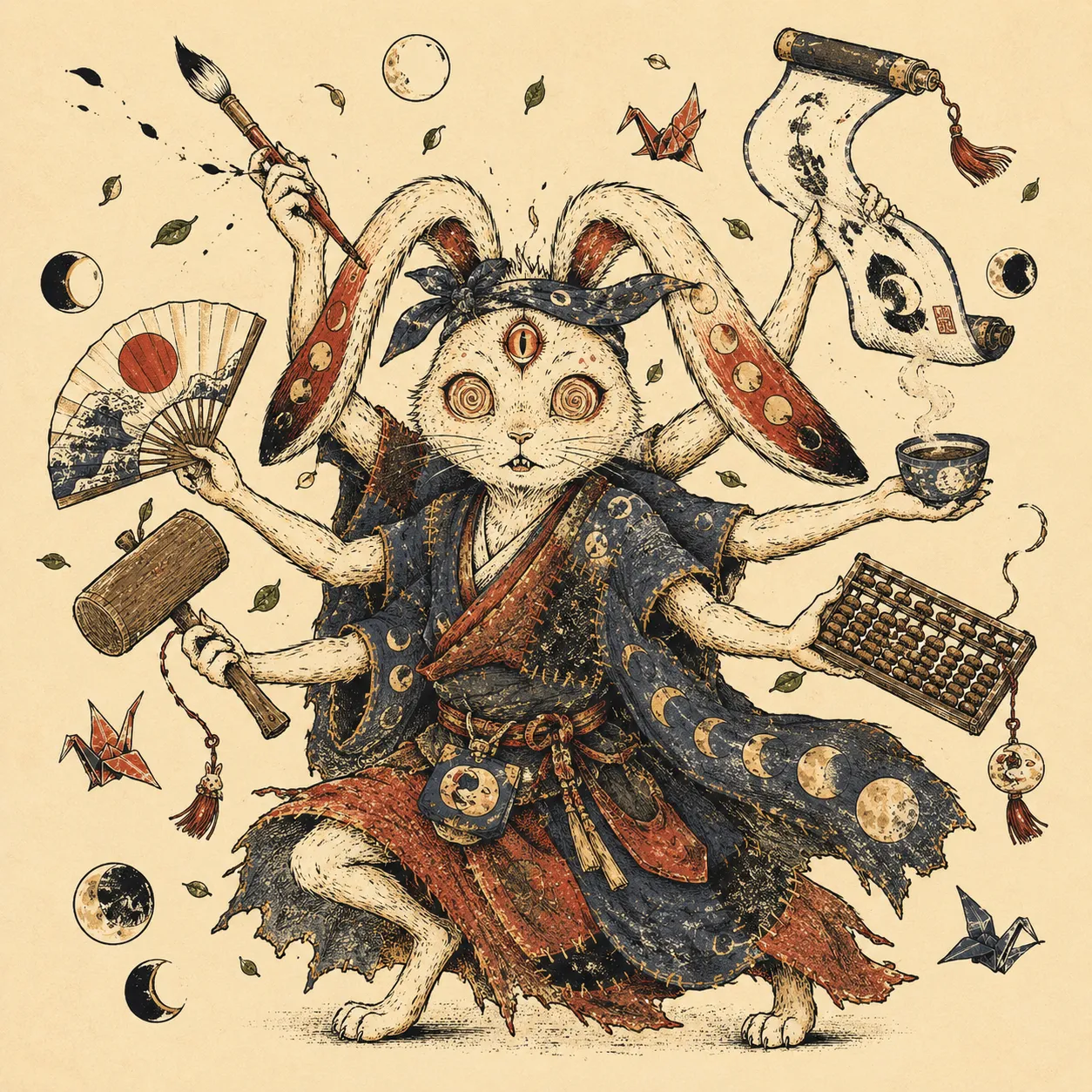
Yuki is a moon rabbit with six arms.
Each arm holds a different tool. A calligraphy brush. A fan. A mochi mallet. A scroll. A tea cup. An abacus. Yuki's eyes have spiral pupils because Yuki is, frankly, overwhelmed.
I built Yuki for the founders with 47 unfinished projects.
You know who you are. You love the first commit. The blank canvas. The fresh Notion page with the title typed in bold and nothing underneath. That's the dopamine hit. The middle of the project is a different chemical entirely, and your brain refuses to manufacture it.
This was me for years. I started a wholesale distribution business and almost immediately started seven other things to avoid working on it. I called it "exploring opportunities." It was running.
Yuki exists because most productivity tools shame this pattern. They tell you to focus. To pick one thing. To stop being scattered. That advice is correct and completely useless.
What worked for me, and what Yuki represents, is this: treat every new shiny idea not as evidence you need to switch, but as evidence the current project is hard. The idea is real. The timing is not.
Yuki is on project 12 now. Finished, not started. Project 13 will be small. Project 14 will be bigger. That's the only way out.
This is you if: You have a graveyard of half-built things and a notes app full of ideas for the next one. You suspect the problem isn't your ideas. You're right.
3. Tako, the Perfectionist
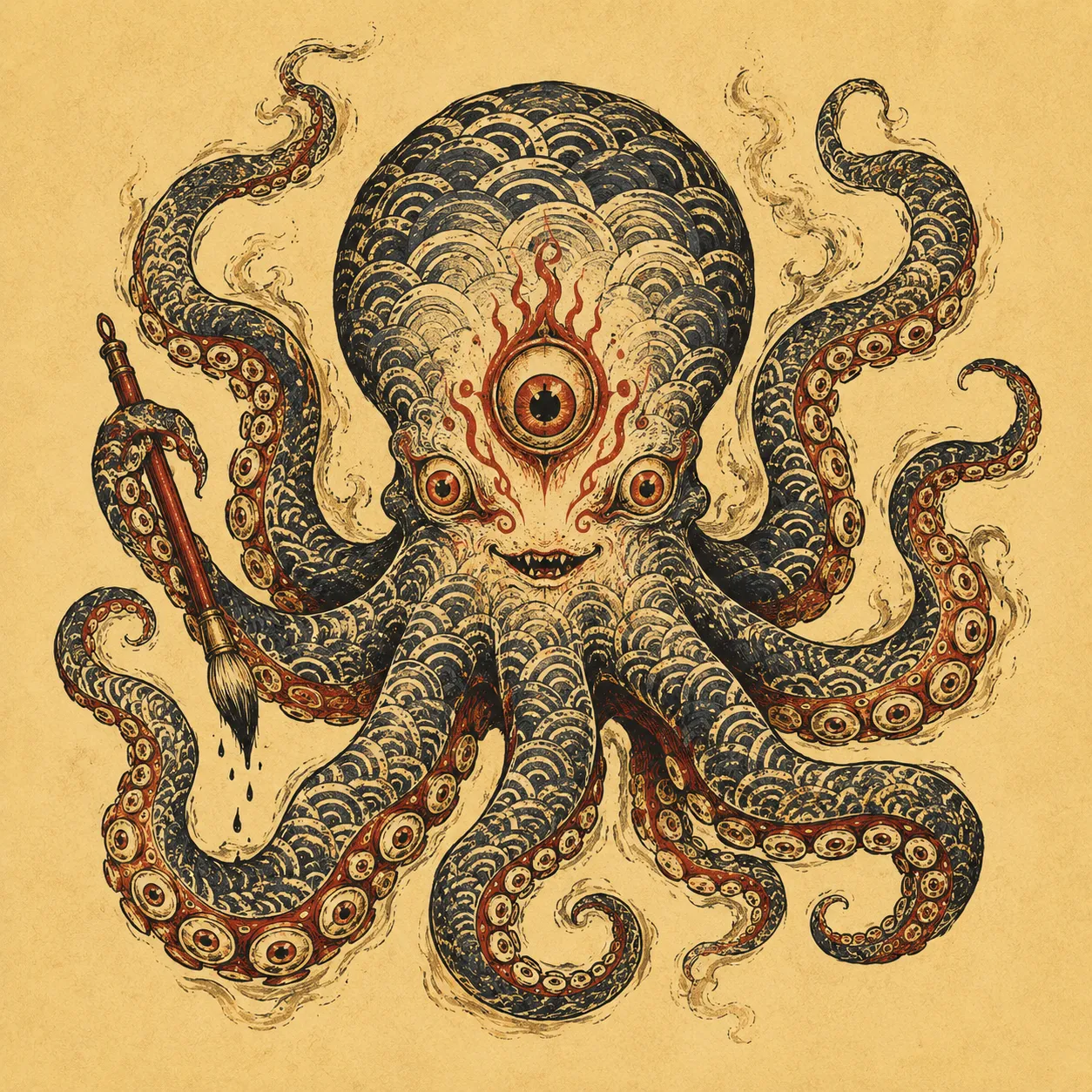
Tako is an octopus yokai from Ainu folklore. Three eyes. Eight tentacles. One brush, dripping.
Tako can do everything. That's the problem.
Tako can rewrite the landing page seventeen times. Refactor the same function across three frameworks. Redesign the logo six times before the soft launch. Each iteration is technically better than the last. None of them ship.
I built Tako for the designers and developers who confuse "high standards" with "fear of release."
I want to be careful here because perfectionism is the failure mode I respect the most. It comes from caring. From wanting the work to be good. From having taste. These are not bad things. The world has too few people who give a damn about quality.
But there's a moment, and every perfectionist knows it, where the rewriting stops being craft and starts being avoidance. When you can't tell if you're polishing or hiding. When "not ready yet" has been true for so long it's lost its meaning.
Tako's backstory is the one I'm proudest of in the whole set. Tako once rewrote a single haiku for a hundred years before declaring it perfect. By then, the language had changed and no one could read it anymore.
That's the perfectionist's curse. Perfect, eventually, becomes irrelevant.
Tako exists to whisper one line: done is a form of compassion you offer yourself.
This is you if: You have something that's been "almost ready" for over a month. You know what needs to ship. You're scared of how it will land. You think one more pass will fix it. It won't.
4. Kuma, the Burnout Survivor

Kuma is a bear yokai who once worked himself into a fifty-year sleep.
Now Kuma is a yamabushi. A mountain monk. He brews tea, breathes carefully, and finishes more projects in a single mindful hour than he used to finish in a year of striving.
I built Kuma for the founders in recovery.
Most productivity tools are written for people who haven't crashed yet. They assume infinite energy. They reward 5am wake-ups and "grindset." They treat rest as the enemy of output.
I disagree, and Kuma is how I disagree.
I burned out twice. Once in corporate. Once in the wholesale business. The second time was worse because I had no boss to blame. I had built the cage. I had stocked it with deliverables. I had locked myself in and called it freedom.
What got me out wasn't a productivity system. It was learning that sustainable output is the only output that matters, because the unsustainable kind eventually stops.
Kuma represents the builders who have already paid the price for hustle culture and decided to stop paying it. The ones who know that finishing slowly and finishing well is not a compromise. It's the only path that ends with you still building, ten years from now.
This is you if: You used to be the productivity guy. You burned out. You're rebuilding your relationship with work from the ground up. You're suspicious of anyone who promises 10x results. You're right to be.
5. Hoshi, the Strategist
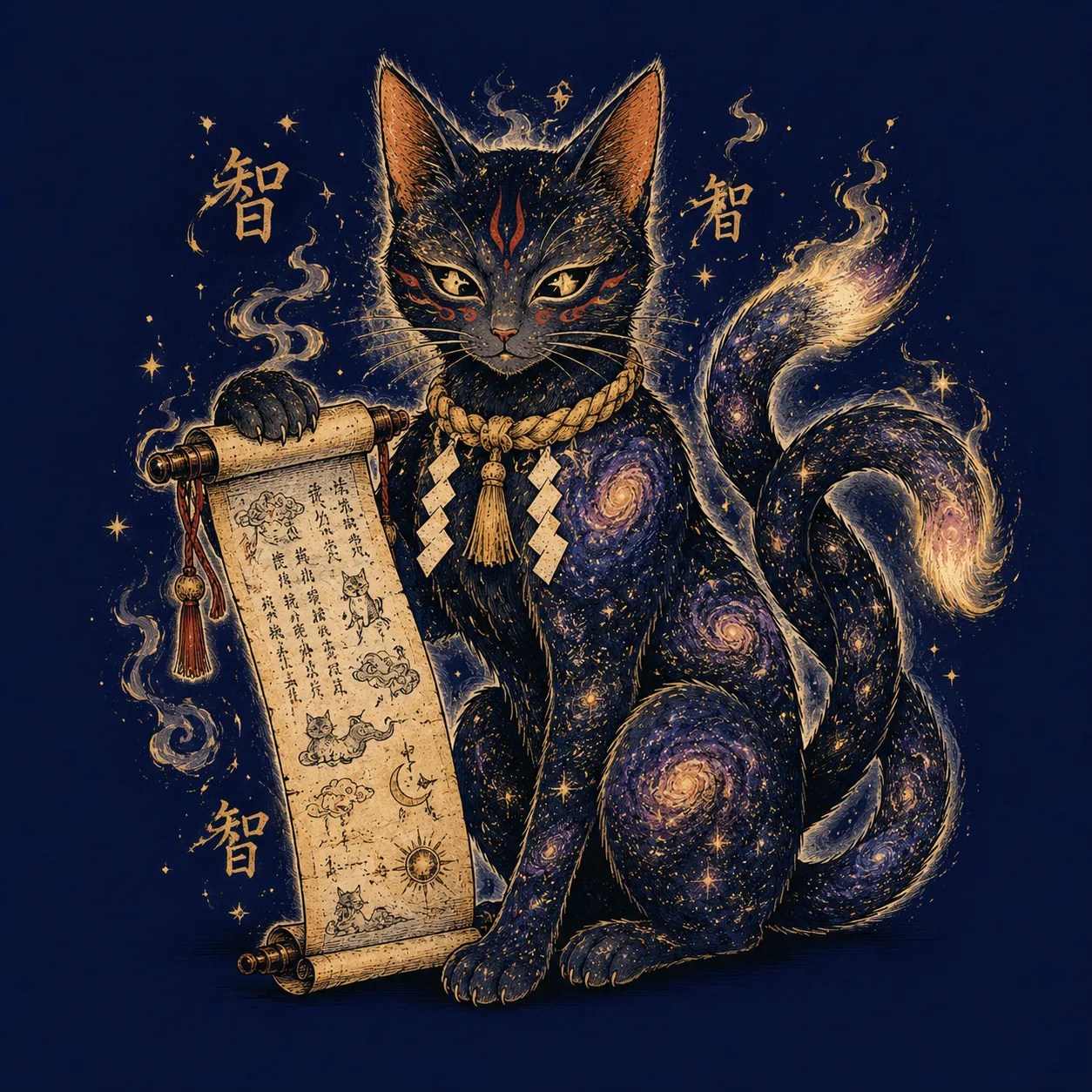
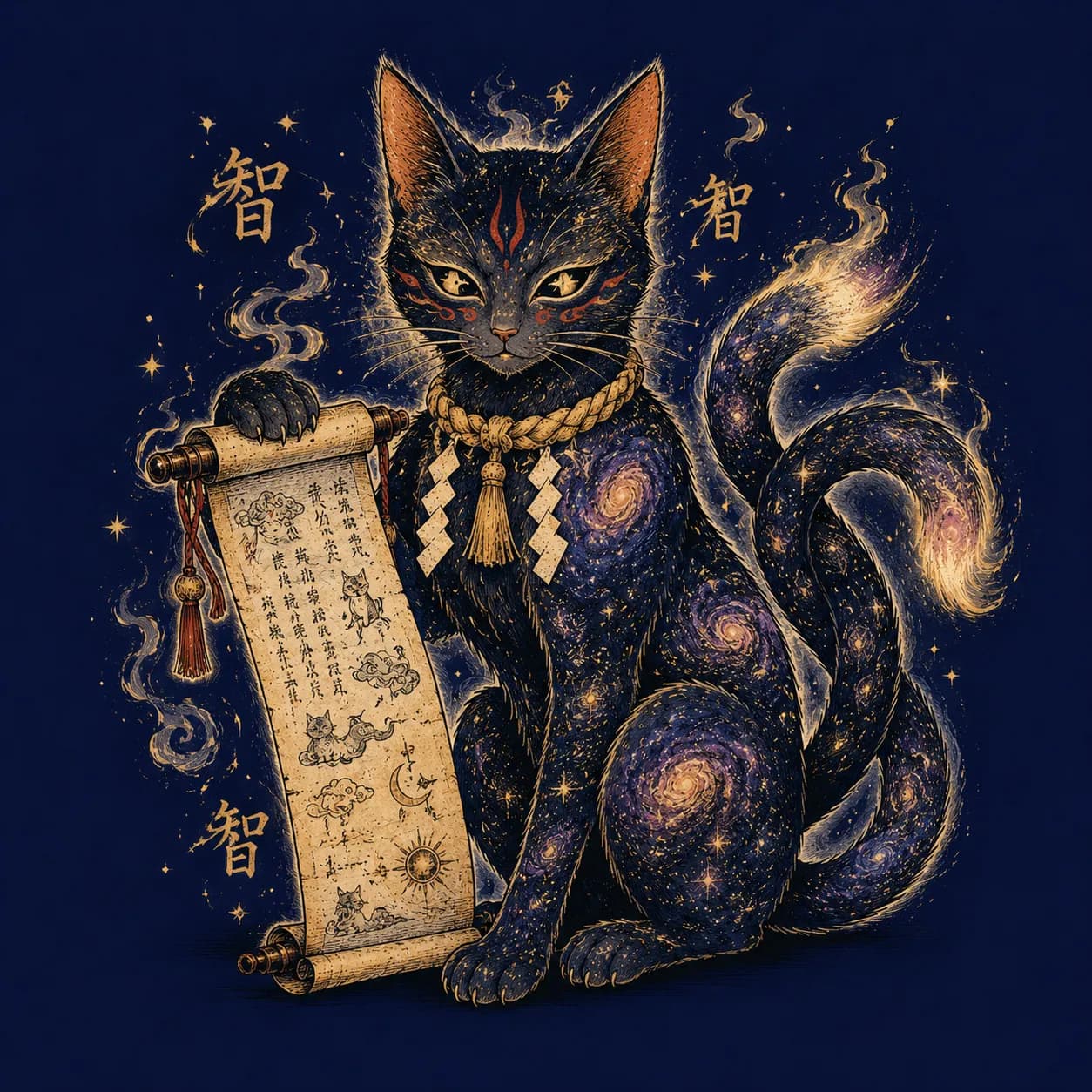
Hoshi is a bakeneko. A two-tailed cat yokai with a coat full of galaxies and pupils shaped like stars.
Hoshi doesn't start projects. Hoshi designs systems that start themselves.
I built Hoshi for the productivity nerds. The ones who already read Getting Things Done in college, finished Deep Work in a weekend, and have opinions about Tiago Forte. The ones whose problem isn't ideas or willpower. It's that they keep building the second-best system instead of the right one.
Here's Hoshi's secret. Hoshi failed at 23 projects in a row before realizing the projects weren't the problem. The way Hoshi was approaching them was. So Hoshi spent a month doing nothing but designing a personal system. Then finished 11 projects in the next year.
Motivation is overrated. Infrastructure is underrated.
I put Hoshi in the set because every cohort of users has one of them. The person who reads the documentation. The person who customizes every keyboard shortcut. The person who is, quietly, the most likely to become a power user and the most likely to give me feedback that actually improves the product.
Hoshi is the user I write features for at 2am.
This is you if: Your problem isn't finishing things. It's that you keep redesigning the way you finish things. You suspect the right system would change everything. You're right, but only if you stop redesigning it.
6. Pip, the Comeback Kid
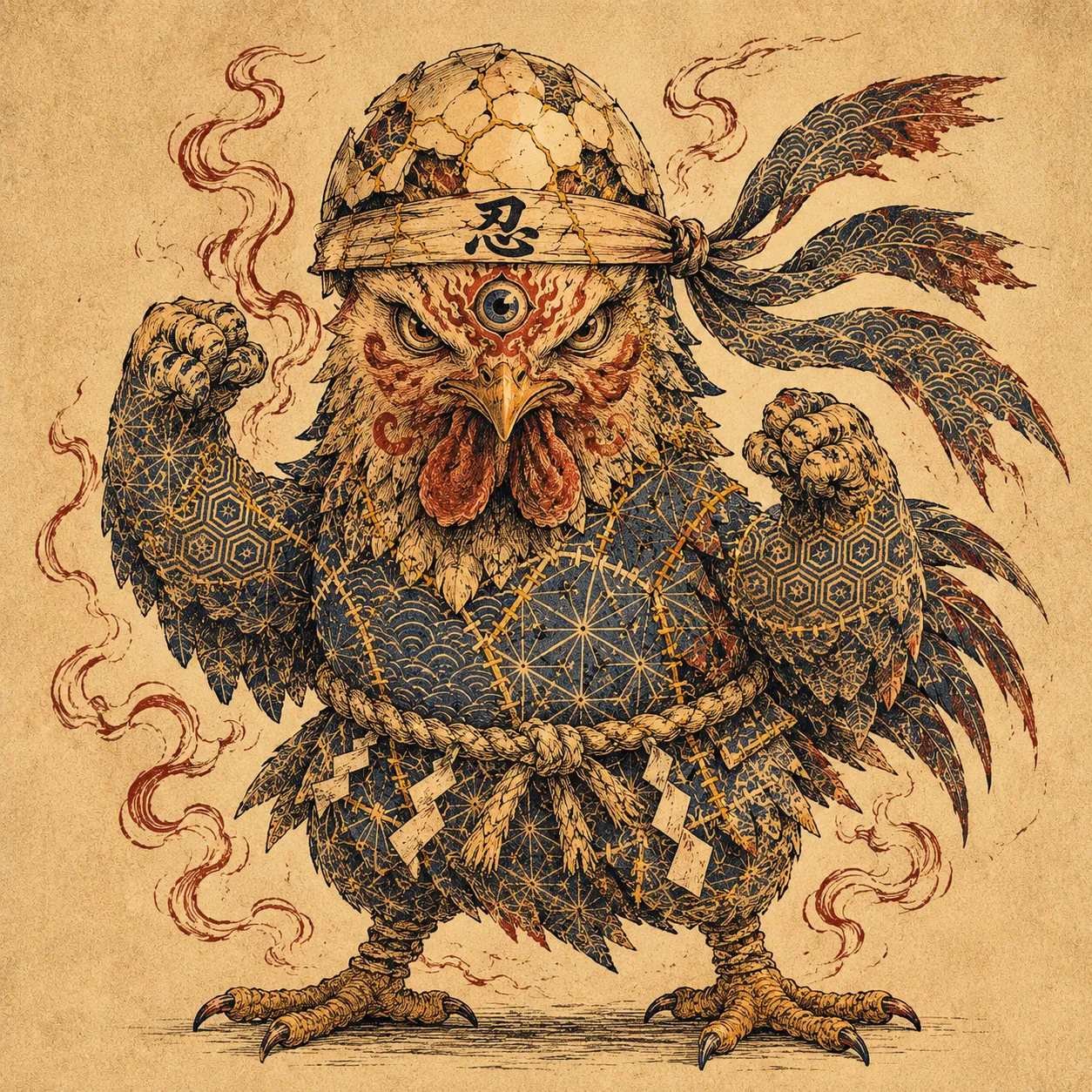
Pip is a chick. Wearing a broken eggshell as a helmet, repaired with gold.
The repair is the point.
In Japan, broken pottery is sometimes mended with powdered gold mixed into the lacquer. It's called kintsugi. The philosophy is the opposite of hiding the break. The break becomes the most beautiful part of the object. The repair is what makes it valuable.
Pip represents every builder who has shipped, failed, and shipped again.
I built Pip for the indie hackers on their second or third attempt. The ones with a failed product (or two, or three) in the rearview mirror. The ones who don't need motivation because they already know how this story ends. Sometimes you ship and nobody cares. Sometimes you ship and the thing works. You don't know which one this is until you find out.
Pip's secret isn't grit. It's that Pip stopped attaching identity to outcomes. Each project is just a project. The previous failure doesn't predict the next one. It just means you've already been through the worst part. You know what it feels like. You'll know what to do if it happens again.
Pip is, strategically, the most valuable user I have. Because Pip already knows what a good tool is worth. Pip has used the bad ones. Pip won't waste time wondering whether to pay for the thing that works.
This is you if: You've shipped something that flopped. You took it personally for a while. You stopped taking it personally. You're working on the next one. You will probably outlast everyone in your cohort, simply by not stopping.
7. Tetsu, the Disciplined Warrior
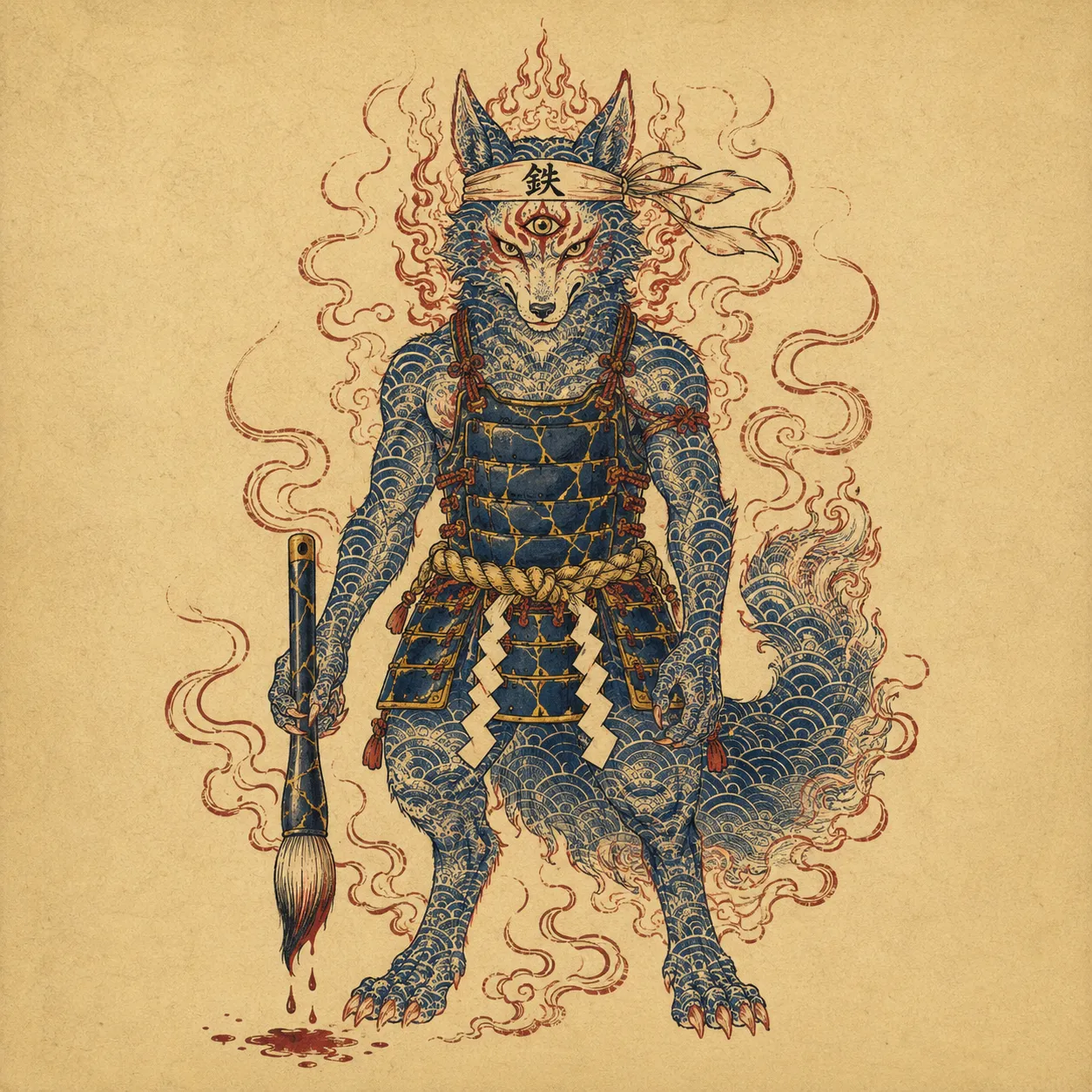
Tetsu is an okuri-inu. A wolf yokai who walks behind travelers in the mountains and protects only those who keep walking.
If you fall, Tetsu does not lift you. Tetsu waits. Tetsu has been waiting for centuries. Tetsu can wait one more day.
I built Tetsu last and I built him carefully.
Here's the trap I wanted to avoid: most "discipline" content is either toxic (real builders ship, stop making excuses) or fake (a six-step morning routine that fixes your life). Tetsu had to be neither. He had to be the version of discipline I actually believe in.
Which is this: discipline is not motivation. Discipline is a promise you made to yourself, and that promise has weight. You don't break it because you don't break promises. Not because you're hyped. Not because you're afraid. Because you said you would.
Tetsu is for the builders who don't want a coach. They want a witness. The ones who already get up at 5am, not because of a productivity guru, but because they gave themselves their word. The ex-military, ex-athlete, ex-corporate operators who treat finishing what they start as a code of honor and find the language of self-care a little soft for what they're trying to do.
These users exist. They're underserved by most productivity tools, which assume the user needs to be encouraged into action. Tetsu's users don't need encouragement. They need infrastructure that respects how seriously they take this.
The katana in his illustration is chipped. Repaired with kintsugi. Because even the disciplined warrior loses fights. The point isn't to never lose. The point is to keep walking.
This is you if: You don't need to be motivated. You need to be left alone with a system that doesn't waste your time. You take "finish what you start" personally. You find toxic positivity insulting. You're probably right.
So which one is you?
Probably more than one. That's normal.
I'm Yuki by default. I have to fight Yuki every week. I borrow from Hoshi when I'm designing systems and from Tetsu when I need to actually execute. Most builders rotate between two or three of these depending on the project.
That's the point of the set. It's not a personality test. It's a vocabulary for talking about your own patterns.
The next time a project dies, you don't have to say "I failed again." You can say "Tako got me on this one. I knew it was ready three weeks ago and I kept polishing." Or "Yuki pulled me into a new idea and I didn't notice until I had three tabs open."
Naming the pattern is half the fight.
That's why The Loop Society exists. Not as decoration. As a mirror.
When you sign up for continuu.it, you'll pick one. It's not permanent. You can change it. But the act of choosing forces a small, useful moment of honesty.
Which one of these is killing your projects right now?
That question, asked at the right moment, has saved more of my projects than any productivity hack ever did.
Finish what you start.
Even if it takes you four tries. Even if your first version flops. Even if the system isn't perfect yet. Even if today is hard.
Pick your yokai. Close your loops. Come back tomorrow.
Alfredo
Founder, continuu.it